
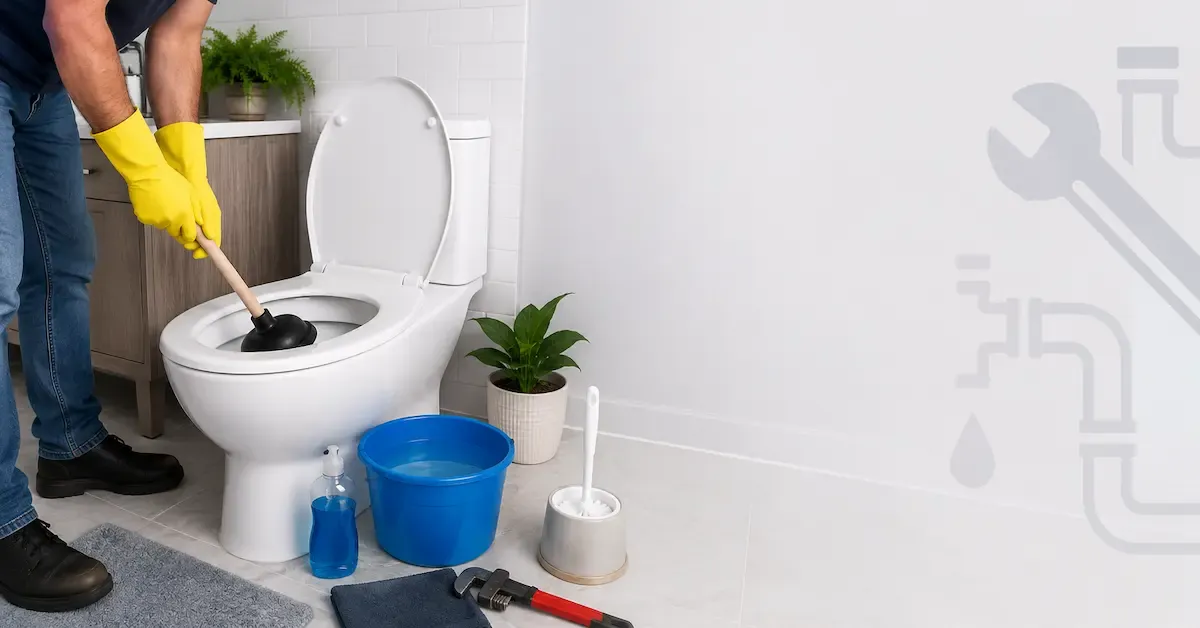
A blocked toilet is the most searched plumbing problem there is, and the good news is that most of them clear in a couple of minutes once you plunge correctly. The trick is technique, not force. Here is how to do it, what to keep away from the bowl, and how to recognise the clog that is really a warning about something bigger.
Use the right plunger, the right way
Most people plunge a toilet with the wrong plunger and then blame the plunger. A flat cup plunger is for sinks. A toilet needs a flange plunger, the kind with a soft rubber sleeve that folds out from the cup to seal into the toilet's opening.
The technique matters more than the effort:
- Seal first. Fit the flange into the drain opening so the cup makes a full seal. There should be enough water in the bowl to cover the plunger head. If the bowl is nearly empty, add water rather than air.
- First push is gentle. The cup is full of air. A hard first push just blows that air back at you. Push down slowly to expel the air, then let the plunger fill with water.
- Then push and pull firmly. Keeping the seal, work the plunger in and out a dozen times. The pull matters as much as the push, because it rocks the blockage loose from both directions.
- Check the flush. Break the seal and see if the water drains. If it does, flush once to confirm. If not, repeat the cycle two or three times before trying anything else.
Done properly, this clears the large majority of toilet clogs. If two or three full cycles do nothing, stop plunging harder and change tools.
Step up to a toilet auger
When a plunger will not do it, a toilet auger (also called a closet auger) is the next step. It is a short cable inside a curved tube designed to feed into the toilet without scratching the porcelain. Feed the cable in, crank it until you feel it catch the blockage, then work it back and forth to break the clog up or hook it out.
An auger is the right tool for a solid object or a wad of the so-called flushable wipes that never actually break down. If you suspect a child has flushed a toy, do not keep augering blindly, because you can push it further into the line. That is a job worth handing to a plumber before it reaches the branch line.
The hot water and dish soap trick
If you have no plunger to hand, this occasionally works on a soft blockage. Squirt a generous amount of dish soap into the bowl, then pour in a few cups of hot but not boiling water from about waist height. Wait fifteen minutes. The soap lubricates and the warm water can soften the blockage enough to clear on the next flush.
Never use boiling water. The thermal shock can crack the porcelain, and a cracked toilet is a far bigger bill than a clog. This trick also does nothing for a solid object or a problem further down the line, so treat it as a stopgap, not a fix.
What not to put in the bowl
Reach for tools, not chemicals. Chemical drain cleaners are close to useless on a toilet clog, they generate heat that can damage the bowl, and the caustic liquid then sits there waiting to splash back on whoever plunges or augers next. They are genuinely dangerous in a toilet, and a plumber who arrives to a bowl full of drain chemical is not going to be pleased about it.
When the clog is really a warning
A one-off clog is nothing to worry about. A pattern is. These are the signs that the problem is beyond the bowl and worth a professional look:
- It clogs again and again. Repeated clogs in one toilet usually mean a partial blockage in the branch line, a venting problem, or an object lodged in the trap. Clearing it weekly is treating a symptom. A plumber can inspect the line and find the actual cause. This is the point to look at proper toilet repair rather than another plunge.
- Other fixtures back up too. If flushing the toilet makes the tub gurgle, or several drains are slow at the same time, the issue is not the toilet at all. That points at the main line and calls for drain cleaning, sometimes with a camera inspection to see what is going on.
- The bowl will not stop rising. If water keeps climbing toward the rim and the shutoff does not calm it, or sewage is coming back up, stop and treat it as urgent. That is the moment for an emergency plumber, because a backed-up main is a health issue as well as a mess.