
Branch or main line?
One fixture backing up is a branch clog. Several at once, or gurgling when the washer drains, points to the main sewer line.
Requests taken 24 hours a day
Wichita Falls, Texas
Need Sewer Line Repair Wichita Falls, TX you can count on? Several drains backing up at once, or a patch of lawn that stays green all summer? Tell us what you are seeing and we will connect you with a licensed plumber who works on sewer lines here.
No forms, one call and you are connected
Available 24/7 in Wichita Falls
(940) 308-0202 📞 Call NowCalls are answered around the clock and may be recorded for quality and routing. Standard call rates apply.
Quick Answer
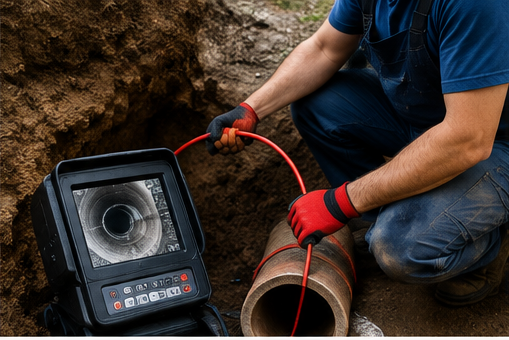
The sewer line repair Wichita Falls, TX homeowners need begins with a camera inspection to find the exact fault, roots in a joint, a grease blockage, a bellied section, or a cracked clay or cast-iron pipe common in older neighborhoods. From there the fix is targeted: root cutting and hydro jetting, a spot repair, or trenchless replacement that spares your yard. Verify the plumber's license free at the Texas State Board of Plumbing Examiners. To get a camera on your line, call (940) 308-0202.
Related reading: What a plumber costs in Wichita Falls
One fixture backing up is a branch clog. Several at once, or gurgling when the washer drains, points to the main sewer line.
Older Wichita Falls streets run clay and cast iron; tree roots enter the joints and shifting clay soil cracks aged pipe.
Pipe bursting or lining can replace a line without trenching the whole yard, ask whether your layout allows it.
Telling the Difference
This distinction matters more than any other on this page, because it decides whether you are looking at a drain cleaning call or a serious repair.
| What you are seeing | Branch line, less serious | Main sewer, treat urgently |
|---|---|---|
| How many fixtures | One sink, tub or shower affected | Several at once, especially on different sides of the house |
| Where it shows worst | At the fixture itself | At the lowest drain in the house, often a tub or floor drain |
| What comes up | Standing grey water in that one fixture | Sewage, sometimes when a completely different fixture is used |
| Toilet behaviour | Flushes normally | Water level rises or drops oddly, gurgles when the washer drains |
| Outside signs | Nothing outdoors | Wet or unusually green patch in the yard, smell near the cleanout |
| History | First time, or occasional | Cleared before and came back within months |
Every gallon you send down has nowhere to go but back up through the lowest fixture in the house. Stop the washing machine and dishwasher too, since those dump large volumes at once. Keep people and pets away from any area with sewage in it, and do not pour drain chemicals into a blocked main. They will not clear it and they put whoever opens the line at risk.
Root Causes
The age of the pipe under your yard is usually the age of your neighbourhood. That single fact predicts most of what goes wrong.
The most common cause in established neighbourhoods. Clay sewer pipe was laid in short sections with a joint every few feet.
What happens: joints seep slightly, roots follow the moisture, and once inside they thicken in the nutrient rich flow until they block it. Mature pecans and oaks are the usual culprits.
Homes from the mid century still carry cast iron drain lines, and cast iron corrodes from the inside over decades.
What happens: the interior scales and narrows, so a four inch pipe flows like a two inch one. Eventually the bottom of the pipe rusts through entirely and the line sags or collapses.
Our clay soil shrinks through a dry summer and swells when the rain comes, and buried pipe moves with it.
What happens: a section settles lower than the run either side, creating a dip where waste collects instead of flowing through. It blocks repeatedly no matter how often it is cleared.
Ground movement can shift two sections of pipe out of alignment at a joint.
What happens: the step catches solids and paper, roots find the gap easily, and the blockage rebuilds within weeks of every clearing. Only visible on camera.
Cooking grease poured down the sink cools and sets in the cooler run beyond the house.
What happens: it coats the pipe wall and narrows the line, then catches everything else passing through. Very common in restaurants, and more common in homes than people admit.
Wipes marketed as flushable do not break down the way paper does.
What happens: they snag on any root, offset or rough joint and form a mat that catches everything behind it. A growing share of main line blockages start this way.
The Fix
Sewer work covers a very wide price range, and the right answer depends entirely on what the camera shows. These are the options in rough order of cost.
Protect Yourself
Never authorise excavation or replacement without seeing camera footage. Ask for the recording and the distance in feet from the cleanout. Any plumber doing this properly will show you without being pushed.
You own the lateral from the house to the city connection. Confirm with the City of Wichita Falls where that boundary sits before paying for work near the street.
Sewer replacement needs a City of Wichita Falls permit and the licensed plumber pulls it. Unpermitted work causes problems at sale and can affect insurance claims.
Questions
Multiple fixtures backing up at the same time is the clearest sign. One slow shower is a branch line problem local to that fixture. A toilet, a tub and a floor drain all backing up together means they share a blockage downstream of all of them, which is the main. The lowest drain in the house shows it worst, because that is where the water finds its way out first. Gurgling when the washing machine empties is another reliable early warning.
Because older lines here are clay, laid in short sections with a joint every few feet, and those joints seep slightly. Roots grow toward moisture, and once a hair thin root finds a joint it is inside a pipe full of water and nutrient, which is ideal growing conditions. It thickens until it restricts flow and catches everything passing. The mature pecans and oaks that make established Wichita Falls streets pleasant are the same trees causing this.
For anything involving digging or replacement, yes, without exception. A camera shows exactly what has failed and exactly where, measured in feet from the cleanout, so the excavation goes to the right spot. Without it, any quote to excavate is a guess, and you are the one paying if the guess is wrong. Ask to watch the footage rather than just being told what it showed.
Methods that replace or rehabilitate the pipe without digging up the whole run. Lining pulls a resin saturated sleeve through the existing pipe and cures it in place, effectively forming a new pipe inside the old one. Pipe bursting pulls a head through that fractures the old pipe outward while drawing the new pipe in behind. Both need access pits at each end rather than an open trench, so your driveway and lawn largely survive. Neither works if the line has fully collapsed.
Generally the property owner owns the lateral running from the house out to the connection at the city main, and the city owns the main itself. Where exactly that boundary falls varies, and it genuinely matters because it decides who pays. Confirm it with the City of Wichita Falls before authorising work near the street. It is worth one phone call before a five figure decision.
Sewer line replacement does, and the licensed plumber pulls it rather than you. Unpermitted work causes real problems when you sell the house, since it shows up in inspection, and it can affect an insurance claim if something goes wrong later. If a contractor offers to skip the permit to save you money, that tells you something useful about how they operate generally.
A camera inspection and root cutting is usually a few hours. A spot repair is often a day. Trenchless lining or bursting on a typical residential lateral is commonly one to two days. A full open cut replacement depends heavily on the length of the run and what is above it, so a driveway or mature landscaping adds time. Ask for a realistic sequence rather than a single number, and ask specifically how long you will be without usable drains.
Partly. Keep grease out of the kitchen sink entirely, and treat wipes as landfill regardless of what the packet claims. If you have mature trees and clay pipe, a camera inspection every few years catches root intrusion while it is still a cutting job rather than a replacement. And if you are buying an older Wichita Falls home, a sewer camera inspection before purchase is one of the highest value inspections available.
Related
Slow tubs, blocked kitchen lines and sewer clogs, cleared and camera checked.
For grease packed kitchen lines and root filled sewers that a cable will not fix.
Burst pipes, sewer backups and water heater failures, 24 hours a day.
A partly blocked line becomes a fully blocked one, and a cracked line keeps washing out soil underneath it. Getting a camera in it early is the cheap part.